What to Expect From a Quality Paint Protection Film Shop
You can spot a high-quality Paint Protection Film (PPF) shop before you ever fill out a quote form or hand over your keys. A premium shop doesn’t just sell you plastic film; they sell you education, honesty, and peace of mind. A high-quality shop knows exactly when to sell you PPF, when to recommend a ceramic coating instead, and—most importantly—when to tell you that your vehicle doesn’t warrant PPF at all.
The First Sign of a Great Shop: Knowing When to Say “No”
A true professional will explain exactly why a job shouldn’t be done based on experience. For example, we do not push expensive PPF packages on standard short-term leases. It just doesn’t make financial sense for the client.
Recently, a long-time client brought in his friend who owned a stunning, one-owner classic Porsche. It was a massive honor to be asked to work on it. But after a thorough inspection, I had to turn the PPF job down. In my professional opinion, applying film to that specific, aged original finish was too risky. (Ironically, the friend who referred him has a 2014 Porsche with PPF installed from Day 0, which still looks incredible—proving that timing is everything).
I’ve also turned away guys who wanted their older work trucks to “look great again,” when the honest truth was that they needed a body shop to cut out rust, not a detailer to apply clear bra. You should expect a high-quality shop to have the integrity to turn down your money if the service isn’t the absolute best solution for your specific vehicle.
The Dealership PPF Trap (Where is your car actually going?)
You should also expect a premium shop to know the industry inside and out—including what happens behind the curtain at the dealership. Are you buying a new car and the dealership is offering to “roll the PPF into your financing,” but they won’t tell you exactly what shop your car is being sent to? There is a reason for that.
Think about the math. When you buy PPF through a dealership, your money is split a dozen ways. You have to pay the sales guy his commission, the sales manager, the finance manager, the owner of the dealership, and the porters driving your brand-new car down the highway to an undisclosed location. By the time the money actually reaches the third-party detail shop, there are only pennies left over for the actual film and the technician doing the work.
By the time the money actually reaches the third-party volume shop, there are only pennies left over for the actual film and the technician doing the work. Usually, that means your car is treated as just another wholesale unit to be moved off the lot as fast as possible.
There is a common misconception that keeping your car at the dealership, or letting them handle the logistics, means it’s safe. But ask yourself: how many different people are getting inside your brand-new vehicle before it’s even delivered to you? You have the transport drivers, the lot porters, the service techs, and the wholesale subcontractors shuttling it back and forth down busy highways like I-78 or the turnpike to high-volume production lots.
Think about where those vehicles actually go when the dealership closes for the weekend. Instead of your vehicle being treated like a prized investment in a secured, climate-controlled studio, these volume operations often leave brand-new, six-figure BMWs and Porsches with fresh dealer plates sitting completely exposed out in the elements all weekend long, just waiting for the workweek to start.
Your brand-new car shouldn’t be subjected to extra highway miles, unknown drivers, or left sitting unsecured as a weekend billboard.
When you get a quote directly from us, you are paying for premium materials and an engineer-minded master technician in an immaculate environment—not a dealership’s overhead and an unmonitored logistics chain. A great shop will have transparent pricing, a verified reputation with real reviews, and absolutely nothing to hide.
So, what should you really expect when you bring your car to a shop that operates with that level of integrity? Let’s set the record straight on the five most common scenarios we see.
1. Should I only get PPF on a brand-new car?
This is the most common question we get, and the answer depends on your goal. But the absolute best time to apply PPF is when a car is brand new, straight off the lot. The reason is simple: you can only protect a new-car finish if you have a new-car finish!
PPF essentially “freezes” the condition of your car’s paint. If you drive your vehicle straight from the dealership to our shop, we lock in that immaculate, factory-perfect surface forever.
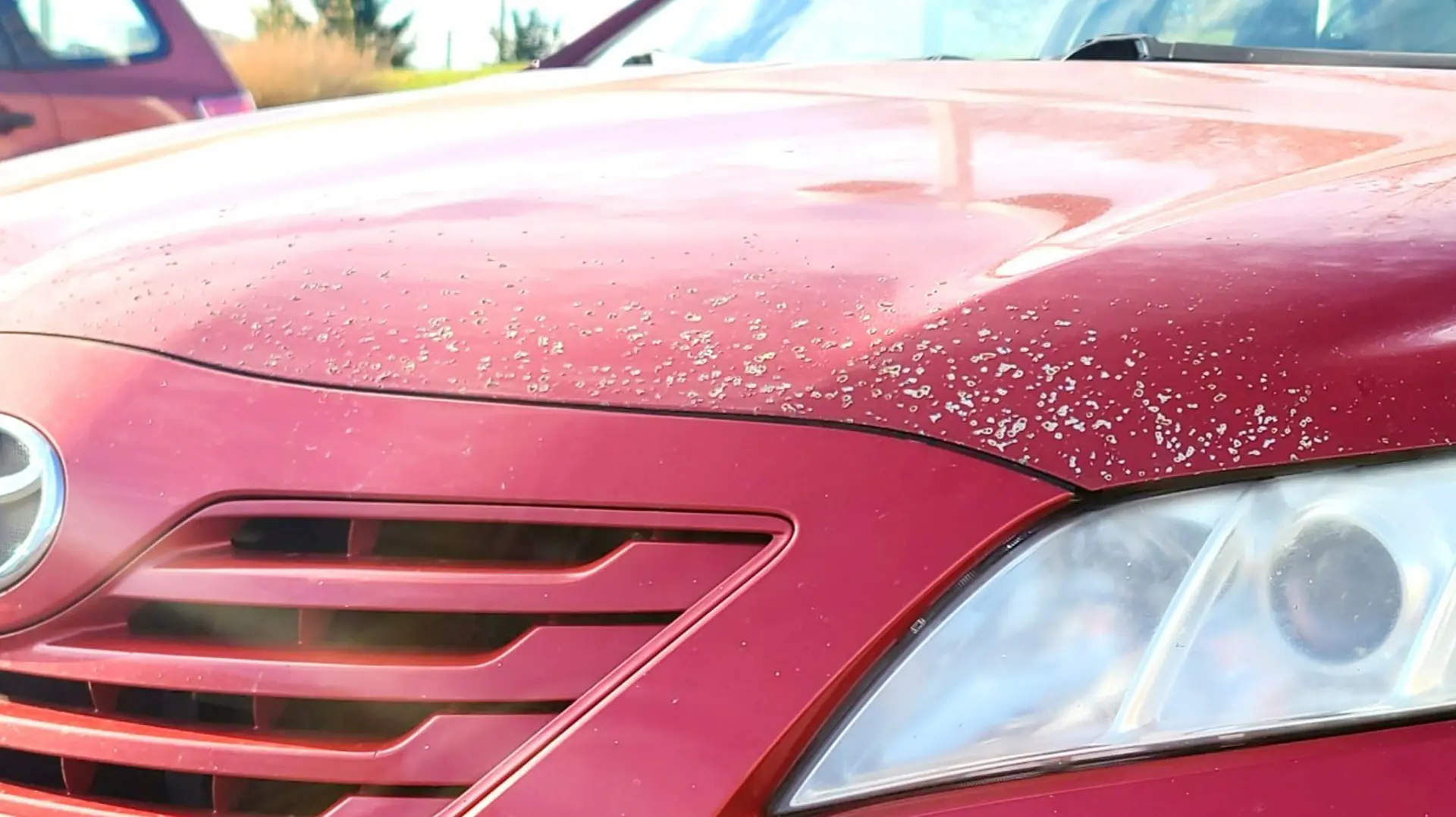
Here’s the bottom line: human nature is to wait until the damage is already done. There’s a saying that people are really interested in buying fire extinguishers right after a house fire. It’s the exact same with Paint Protection Film. I get calls every single week from owners who just took their first highway road trip, caught a massive rock to the hood, and now they urgently want to wrap the car. But by then, the damage is permanent.
You already know if paint chips really bother you. The fact that you’re reading this article is a pretty good sign that they do. There is nothing worse than the gut-wrenching feeling of paying to install film over paint that is already chipped up, knowing that damage could have been prevented with a little forward-thinking. My honest advice is always the same: buy the fire extinguisher before the fire. Get your car protected on day one, and you’ll be happy you did.
2. The Hard Truth About PPF on Used Cars (And The Respray Trap)
Can you put PPF on a used car? Technically, yes. The film will physically adhere to the panels. But over time, doing this created a massive professional paradox for me.
Here is the hard truth: Paint Protection Film is a protective service, not a corrective or enhancement service. If you apply clear film over existing rock chips, the film will not hide them; it encapsulates them, creating a tiny air pocket that often makes the chip look more prominent. Trying to fix something that is mathematically unfixable is a losing game, and I refuse to compromise our shop’s reputation or gamble with your money.
Because of this, we have instituted a strict, non-negotiable policy: We no longer accept vehicles older than 2 model years for Paint Protection Film, and every previously driven vehicle requires a physical, in-person paint inspection. If your car has been on the highway for a few years, we will be completely honest with you: a thorough paint correction and a premium ceramic coating is almost always a significantly wiser, more beautiful investment.
“Okay, then I’ll just have the bumper resprayed later if it gets bad.”
You see this advice all over car forums and the internet. Let me be blunt: it is complete internet forum bullshit. Do not ask the internet what you should do with your car. The guy typing “just respray it” hasn’t been to a premium body shop lately. Professional paint work is incredibly expensive.
Years ago, I had a guy initially try to decline PPF for this exact reason. He was honest with me, which I appreciated. He said on his last vehicle, he just waited a few years and had the front end resprayed. I genuinely wanted to know the math—maybe he had a point. So I asked him: “What did that respray cost you?” He told me the number. He paid exactly twice as much for the respray as the PPF package I had just quoted him.
I delicately explained to him that my PPF package was going to save him half his money. But more importantly, his truck was going to look good every single day. When you rely on the “respray method,” your truck truly only looks good twice: the day you buy it, and the day you pick it up from the body shop. The rest of the time, you are driving around in a chipped-up truck. Once he heard the actual math, he immediately booked the PPF installation.
Addressing the Elephant in the Room: “But PPF doesn’t increase trade-in value!”
While we are debunking internet myths, let’s address this one. Who is usually making the argument that PPF doesn’t add to your trade-in value? Let me give you a hint: it’s almost always detailers who sell ceramic coatings because they don’t have the skill, training, or facility to install PPF.
Truth be told, the whole reason I started offering ceramic coatings years ago is because I used to be a one-trick pony doing exclusively PPF. Clients constantly came in asking about ceramic coatings. I would have to explain the difference between the two, or send them to another shop to get the coating applied over my film. Today, we are masters at both.
Now, will I gladly sell you just a standalone ceramic coating? Absolutely—I will always install exactly what you want. But I am going to educate you first: ceramic coatings do not stop rock chips. If you want to stop physical damage, PPF has to be your first line of defense.
My clients are highly educated. They understand that a vehicle’s trade-in value isn’t just one static number spit out by a computer. That value completely depends on the physical condition and appearance of the vehicle when the appraiser walks around it. If your front end looks like it was blasted by a gravel shotgun, you are getting knocked down to the lowest condition tier. If it looks factory-perfect, you command top dollar.
Honest body shops regularly refer clients to us because they know your original, factory-applied paint is almost always superior to a respray. Here is what the “just respray it” trap actually costs you:
- It’s Far More Expensive: As my client found out, a high-quality, professional respray costs significantly more than protecting it with PPF in the first place.
- It Tanks Your Car’s Value: When you trade in your vehicle, a savvy buyer or dealer will detect the repainted panels, immediately assume the car was in a major accident, and slash your resale value.
- It Doesn’t Solve the Problem: After spending double the money, you’re left with brand-new, fragile paint. The entire rock chip cycle begins all over again the minute you hit the highway.

https://www.youtube.com/embed/itSU-2yZ6Rg Wondering if you really need PPF? In this impromptu video, Bill examines a used BMW X5 on a dealership lot, showing the real-world ‘peppering’ of rock chips that accumulates from normal driving.
3. How “Perfect” Should a Professional Installation Be? (Watch Out for These Industry Secrets)
Our goal is always perfection, and we lose sleep making each job as flawless as humanly and technically possible. But it’s critical to understand that we are applying a flexible film by hand onto a complex surface. The mantra is paint protection, not paint perfection.
If you view a world-class PPF installation under harsh inspection lights, you might find a microscopic speck of dust. A true professional doesn’t promise an impossible, literal definition of “flawless.” Instead, they offer transparency. Unfortunately, the PPF industry is full of dirty secrets that consumers never hear about. Watch out for these two massive red flags:
The Subcontractor Shuffle
Many high-end dealerships and high-volume detail shops don’t actually install the PPF themselves. They sell you the job at a massive markup, then hire a 1099 independent subcontractor to come to their shop and do the work. The problem? There is zero accountability. If the film lifts six months later, the shop blames the subcontractor, the subcontractor ghosts them, and you are stuck with a peeling car. At Immaculate Paint Protection, we do all our work in-house. Period.
The “YouTube Certified” Rookie
The barrier to entry in this industry is dangerously low. Anyone can buy a roll of film, watch a few YouTube tutorials, and call themselves a “professional.” They practice on your $80,000 vehicle. True PPF installation takes years of discipline, specialized training, and a meticulously clean environment.
This is why I invite clients to our studio. I always follow up with a simple question: “Sir, if I keep my shop this clean, how do you think I’m going to treat your car?”
https://www.youtube.com/embed/Ps-pCDX3Pkw The quality of the installation is directly related to the quality of the environment. A true professional PPF installer invests in their workspace.
4. How do you balance price with the quality of the result?
This won’t offend me, I’ve heard it before. Every now and then, I hear a common objection: “Bill, your price is higher than the other guy.” Let’s be honest—nobody has ever called me and said they want to pay more. But here is the reality of why that happens.
First, I put all of my prices clearly on my website. I believe in total transparency. Because my numbers are public, if a shop lacks the skill or reputation to compete with us on quality, all they can do is look at my website and say, “I’ll do it cheaper.” That is a massive trap.
Let me show you where the bear traps are set for you in this industry:
- Trap #1: The “Call Me Last” Guy – There are shops whose entire sales pitch is, “Go get your quotes and call me last.” Why do they say that? Because they don’t have a standardized pricing model based on the actual value of their work. They just want to hear what the premium shop quoted so they can undercut it to steal the job.
- Trap #2: The Finance Office Ambush – If you are buying a new vehicle, get your PPF quotes before you go to pick up the car. Do not wait until you are sitting in the finance office, exhausted and ready to drive home, to let them roll an overpriced, under-delivered protection package into your monthly payment.
The Reality of “Cheaper”
I tell people all the time: go ahead and call around. I know for a fact you can get it cheaper. But the real question you have to ask yourself is: What did you have to give up to get it cheaper?
We do not play the “starting at” price-haggling game. I am a professional running a legitimate business. I know exactly what it costs to buy premium materials, keep the lights on in an immaculate facility, carry the proper insurance to protect your vehicle, and pay for the meticulous time it takes to do this job right. If I charge any less, I am essentially giving my time away. That means I have to rush the installation just to make a profit. And in the world of PPF, a rushed job is a botched job.
When you shop around, you will usually find two dangerous extremes on the pricing spectrum:
On one end, shops charge three or four times our rates in the pursuit of “absolute perfection.” These shops cater to owners of million-dollar vehicles where a tiny, incremental improvement is worth a massive cost. My philosophy has always been that it’s wiser to get a great, durable, and beautiful job at a reasonable price—and perhaps protect two family cars—than it is to chase an impossible standard on one.
On the other end, you have the low-cost offers. If you fall for a pushy sales job for a “deal,” you will almost certainly sacrifice quality. We’ve had many clients come to us after a bad installation elsewhere. They might have paid less initially, but in the end, they paid far more in time, aggravation, and money to have the bad film removed and new film installed correctly. The cheapest job often becomes the most expensive.
Our goal is the sweet spot. We offer different levels of material to fit your specific goals, but we never compromise on the craftsmanship. We deliver a stunning, durable result for a fair and transparent price.

5. How do I know I’ll be happy with the long-term value?
This is where the rubber meets the road. In the automotive industry, it is very easy for a shop to treat customers like a one-time transaction. They push the car out the door, collect the check, and move on to the next one.
Our philosophy is the exact opposite. Real value isn’t just about the day you pick up your car; it’s about how you are treated down the road. We don’t want a transactional relationship with you; we want to earn your trust for the long haul. Our commitment to you isn’t just about a piece of paper or a standard factory warranty—it’s our personal commitment to building a real relationship.
To show you what that actually looks like, a client recently came to us after having an incredibly frustrating, bad experience at another shop. We took care of his vehicle, fixed the issues, and earned his trust. Because we treated him with transparency and respect, he confidently brought us his daughter’s brand-new vehicle to set her up for success right from the start.
I shook his daughter’s hand and reassured her, “I will absolutely stand by my work and will always be here if you need anything.” Then, I looked over at her dad, smiled, and said, “And as for your car, I guess I’m standing behind the other guy’s work now, too.”
That is the level of commitment you should expect from a professional. We understand that our business doesn’t grow because of clever marketing or cheap discounts. It grows because of family referrals, neighborhood recommendations, and absolute accountability. We aren’t just protecting an asset; we are providing peace of mind.
Our hope is that when you leave our shop, you are so thrilled with the experience that when you, your spouse, or your kids buy your next vehicle, you don’t even have to look for an installer—you already know exactly where you are bringing it. That is where the true value lies.
https://www.youtube.com/embed/Ix9tmX2gyCQ The ultimate sign of trust isn’t just one happy client; it’s when they confidently send their friends and family to you. In this video, Greg shares his perspective on the value of a professional PPF installer you can truly rely on.
Conclusion: An Investment in Peace of Mind
Choosing the right installer is a bigger decision than choosing the right film. These questions are designed to move the conversation beyond just price and product, and into the far more important areas of an installer’s process, professionalism, and principles.
Education and expectation management are two of the most important parts of my job. With the hundreds of customers I’ve worked with over the years, I’ve learned the value of both. At the end of the day, my hope is that your expectations are met by reality and that you have complete peace of mind in your investment. For me, the best reward is when a customer says, “My car looks better than when I dropped it off!” That’s the satisfaction of a job done right.
Experience the Immaculate Difference.
You may have noticed other local sites flooding with generic articles and “perfect” images. Here is the uncomfortable truth: AI can generate a blog post, and 5-star reviews can be bought in bulk.
But you cannot fake the smile of a real neighbor standing next to their finished car. Every photo on this site features real work, done in our shop, on real local vehicles.
We believe trust should be seen, not just generated. Watch over 45 video testimonials to see exactly what your friends in the Lehigh Valley are saying.

![[TEMP] Placeholder Image - 16:9 Landscape](https://www.immaculatepaintprotection.com/wp-content/uploads/2025/12/Temp-16x9-Replace_Me_v1-768x432.webp)